

• Skip to main content
  • Skip to secondary menu
  • Skip to primary sidebar
Decoder.ca

Decoder.ca

Canadian Tech in 100 Words

 
  • About
  • News
  • Techtalent.ca
  • Dictionary
  • Contact

Bitcoin Consortium Launches Insurer

February 23, 2026 by Newsdesk

The Canadian Bitcoin Consortium has launched Blockchain Insurance Inc., a newly licensed Alberta-based insurer serving digital asset and fintech businesses. Structured as an association-owned captive insurer, the entity is owned by its members rather than a third-party carrier. The goal is to reduce insurance costs and improve coverage access for crypto-adjacent firms.

Executive director Koleya Karringten called the move “historic,” signalling recognition that digital asset risk is now quantifiable and manageable. The company does not insure cryptocurrencies directly but provides commercial coverage for exchanges, custodians, and infrastructure providers. The launch marks a step toward institutional maturity within Canada’s digital asset ecosystem.

Want to know more? Check out the source code on Fintech.ca.

Quebec Megawatts Move to Data Centres

February 23, 2026 by Newsdesk

Bitfarms is converting its eight Quebec crypto mining facilities into AI and high-performance computing data centres, redirecting 170 megawatts of provincial power away from blockchain and toward artificial intelligence.

The shift comes as Hydro-Québec doubles electricity rates for large data centres to 13 cents per kilowatt hour, pending regulatory approval. The utility expects provincial data centre demand to grow sevenfold by 2035. Hydro-Québec previously restricted new crypto mining projects, citing limited job creation and high energy use. Critics note AI data centres raise similar concerns. Bitfarms’ pivot signals AI may now command the megawatts once reserved for cryptocurrency.

Want to know more? Check out the source code on The Logic.

Canada Misses $66B in Startup Value

February 23, 2026 by Newsdesk

Canada’s leading startup hubs have missed out on an estimated US$66 billion in value since 2019 due to slower growth than global peers, according to a report from the National Angel Capital Organization and Startup Genome.

The study finds Toronto-Waterloo, Vancouver, and Montreal grew at just 2.2% annually, compared to nine to 17% elsewhere. Smaller seed rounds—about 40% below comparable U.S. hubs—and longer fundraising timelines are limiting scaleups. The shortfall translates into roughly 133,000 fewer startup jobs and weaker public-market outcomes. NACO says strengthening early-stage capital is critical to reversing the cascading funding gaps.

Want to know more? Check out the source code on The Logic.

OpenAI Debated Police Warning in Tumbler Ridge

February 20, 2026 by Newsdesk

OpenAI debated alerting police months before a fatal shooting in Tumbler Ridge, British Columbia, after a user described violent scenarios to ChatGPT, according to people familiar with the matter. The company’s automated systems flagged the posts, prompting internal discussions among roughly a dozen employees. Some staff believed the messages signaled potential real-world harm and urged notifying authorities.

OpenAI ultimately banned the account but did not contact law enforcement, saying the activity failed to meet its threshold of a credible and imminent risk. The incident highlights growing tension between user privacy and public safety as AI chatbots capture increasingly personal disclosures.

Want to know more? Check out the source code on The Wall Street Journal.

Canada Opens Door to Challenger Banks

February 20, 2026 by Newsdesk

Canada’s banking regulator will fast-track licence applications from credit unions, fintechs, and other technology-driven firms under a 12-month pilot launching in June. The Office of the Superintendent of Financial Institutions says applicants will receive feedback within four weeks, a recommendation to the finance minister within a year, and final approval within three months. The regulator will also publish a public dashboard tracking progress.

The move aims to boost competition in a sector dominated by the Big Six banks, which hold 93% of assets. Industry groups welcomed the change, though experts warn licences still bring significant compliance obligations and oversight.

Want to know more? Check out the source code on The Logic.

Swiss Climeworks Opens Calgary Headquarters

February 20, 2026 by Newsdesk

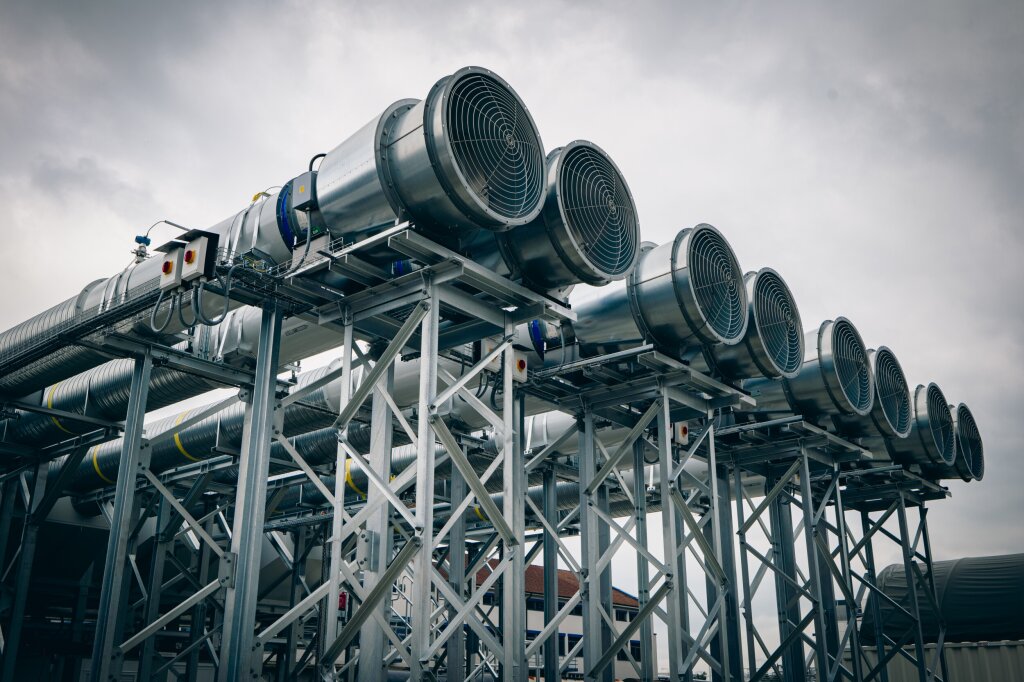
Swiss carbon removal firm Climeworks is establishing its Canadian headquarters in Calgary at the Energy Transition Centre. The company plans to test direct air capture technology in cold-weather conditions, with a mobile facility expected to begin operating in fall 2026 before a larger commercial plant. Employees are already working from the hub, with local hiring planned.

Climeworks cited Alberta’s carbon management expertise, infrastructure, and regulatory environment as key reasons for choosing Calgary. Industry groups say the move reinforces the province’s role in carbon removal deployment and commercialization. The expansion adds momentum to Canada’s growing carbon removal sector and its economic potential.

Want to know more? Check out the source code on CleanEnergy.ca.

Mecademic Raises $21M for Expansion

February 20, 2026 by Newsdesk

Montréal robotics firm Mecademic has raised $21 million in strategic funding led by Investissement Québec, with participation from Export Development Canada and the Business Development Bank of Canada.

The company builds ultra-compact industrial robots designed for precision manufacturing in electronics, medical devices, and biopharma. Small enough to fit in tight spaces, the robots enable automation where traditional systems cannot operate. Customers include SpaceX, NASA, and Meta. Mecademic plans to expand its headquarters and grow hiring across the United States, Europe, and Asia. Founded in 2013, the firm says it produces the world’s most precise compact industrial robots.

Want to know more? Check out the source code on BetaKit.

Calgary Tech Protects Olympic Venues

February 20, 2026 by Newsdesk

A Calgary safety technology company is helping secure the 2026 Winter Olympics in Italy. Blackline Safety has deployed connected gas and radiation detection systems with the Belluno Provincial Fire Brigade in the Milan-Cortina region. The specialized hazardous-materials unit is using wearable detectors and area monitors to identify nuclear, biological, chemical, and radiological threats during venue sweeps and live events.

The equipment delivers real-time alerts, enabling rapid response and coordinated evacuation if hazards are detected. CEO Cody Slater said the Olympics represent one of the world’s most challenging safety environments. The deployment shows industrial safety technology expanding into large public-event security.

Want to know more? Check out the source code on Calgary.tech.

Canadian VC Money Consolidates In 2025

February 19, 2026 by Newsdesk

Canadian venture capital activity closed 2025 with a record fourth quarter, as startups raised $3.8 billion across 165 deals, according to the Canadian Venture Capital and Private Equity Association.

For the full year, companies secured $8 billion over 571 deals, down six per cent from 2024 while deal count fell 12 per cent. The data shows capital concentrating into fewer, larger rounds. Early-stage funding slipped slightly, Series A and B deals declined sharply, and later-stage and growth rounds rose 25 and 60 per cent respectively. With no IPOs and fewer exits, investors have less capital to recycle into startups, dampening ecosystem liquidity.

Want to know more? Check out the source code on The Logic.

Hydro-Québec Targets Data Centre Power Rates

February 19, 2026 by Newsdesk

Hydro-Québec plans to significantly raise electricity rates for high-consumption digital infrastructure users as demand surges. The public utility proposes charging 13 cents per kilowatt hour for data centres drawing more than five megawatts, while crypto mining rates would rise eight per cent to 19.5 cents.

The increases, pending approval from the provincial energy regulator, would take effect in the second half of 2026. Hydro-Québec expects provincial data-centre demand to grow sevenfold by 2035, surpassing 1,000 megawatts. Officials say higher pricing will protect households and smaller businesses from rising bills while reflecting infrastructure and capacity costs created by energy-intensive computing facilities.

Want to know more? Check out the source code on The Logic.

Next Page »

Primary Sidebar


Stay in Touch

  • LinkedIn
  • RSS
  • Twitter

Copyright © 2026 Incubate Ventures | Calgary.tech · CleanEnergy.ca · Fintech.ca · Legaltech.ca · Techcouver.com · Techtalent.ca · | Privacy